Cooling Services for the Indianapolis Area
Johnson-Melloh Residential provides cooling system services for Central Indiana homeowners who want reliable, honest service.
Our certified technicians provide the right service at the right price, with no upsells or pricing gimmicks.
What you need is what you get.
Air Conditioning Maintenance
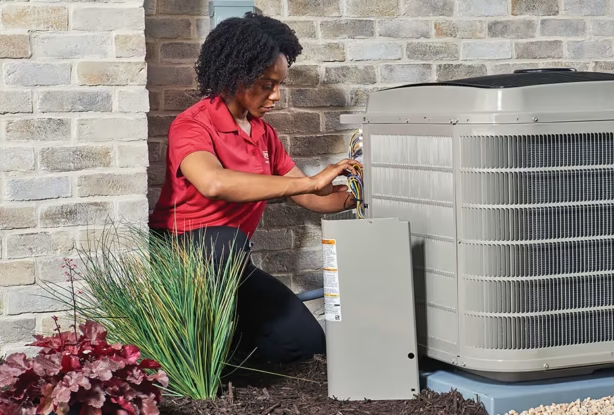
Homeowners can avoid costly AC repairs and replacements with regular air conditioning system maintenance. And while some items can be done on your own, a certified HVAC professional provides a complete and thorough maintenance service.
JMR technicians verify overall cooling system performance and efficiency by providing an industry-standard inspection, testing, and cleaning on a regular schedule–with no shady upsells.
Avoid costly repairs (and sales gimmicks).
Inspect and Clean
- Internal coils
- Blower motor
- Outdoor unit
- Supply and return vents
Check
- Electrical connections
- Thermostat calibration
- AC capacitor
- AC drain line
Lubricate
- Fan blades
- Belts
- Other moving AC parts
Test
- Cooling performance
- Airflow
- Electrical components
- Refrigerant levels
- Safety controls
Replace
- Dirty air filters
- Worn components as needed and requested
Air Conditioning Repair
Is it time to repair or replace my air conditioning system? The age of your AC system likely holds the answer, but you deserve to know your options.
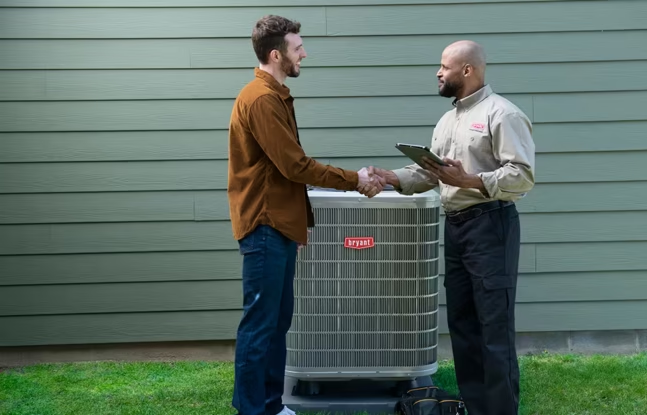
Certified HVAC technicians can quickly pinpoint problems with your cooling system and provide you with options that fit your circumstances.
Johnson-Melloh Residential guarantees an honest assessment of your AC. No pressure. No upsells.
Capacitors
Compressor
Condensate Drain Lines
Contactors and Fuses
Evaporator Coils
Thermostats
Air Conditioning Replacement
Replacing a home air conditioning system is a major investment. To ensure you get the most out of it, choosing the right equipment and installation professionals is critical.
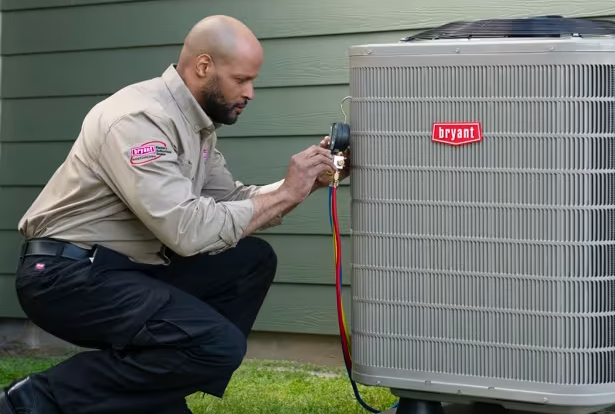
JMR technicians work with you to select the right AC system, then safely connect and calibrate the system to ensure maximum energy efficiency and long-term reliable performance.
Entrust your air conditioning installation to an experienced professional. Certified HVAC technicians, not salesmen on commission.
Home Assessment and Sizing
- Square footage of home
- Insulation levels
- Ductwork condition
Model Selection
- Preferred Budget
- Central, Mini-Ductless, Packaged Units
- SEER2 ratings
- Comfort features
Site Preparation
- Clean work area
- Adequate ventilation
Precision Installation
- Meeting factory specifications
- Secure connections electric and drain
System Testing and Calibration
- Measure airflow
- Calibrate thermostat
- Verify refrigerant levels
- Test the full system
Final Inspection and Education
- How-to operate system
- AC system maintenance requirements
- Answer questions
Air Conditioning FAQ
We recommend professional maintenance once a year on your AC system.
The best time to service your air conditioning system is in the late winter or early spring, well before the warm months of summer.
Planning maintenance ahead of extreme heat will help homeowners avoid uncomfortable delays in service and costly emergency AC repair calls.
It is normal for a central air conditioning system to produce condensation during operation. A condensate line is designed to route the water to a drain. However, when that line or secondary drain line becomes clogged or blocked, homeowners way observe a leak around the AC unit or hear an interior drip.
EER2 (Energy Efficiency Ratio) and SEER2 (Seasonal Energy Efficiency Ratio) ratings measure the energy efficiency of an air conditioner or heat pump.
EER2 is measured under peak load, while SEER2 is measured under a seasonal load.
A higher SEER2 rating means better energy efficiency over a typical cooling season. A higher EER2 (Energy Efficiency Ratio) shows robust efficiency during peak heat conditions (95°F). In each case, the result is lower monthly cooling costs and improved long-term home comfort.
Central air conditioning systems last between 12 to 15 years when properly maintained.
Hot spots in a house usually happen because of restricted airflow, leaky ductwork, poor insulation, or an improperly sized HVAC system. The solutions range from simple and cheap, to complex and expensive.