Heating Services for the Indianapolis Area
Central Indiana homeowners in need of heating services have a reliable, honest provider in Johnson-Melloh Residential.
Our certified technicians provide the right service at the right price, with no upsells or price manipulation.
What you need is what you get.
Heating Maintenance
Regular maintenance of your heating system is the best way to avoid costly furnace repairs and replacements. But a heating maintenance call should never turn into a sales pitch.
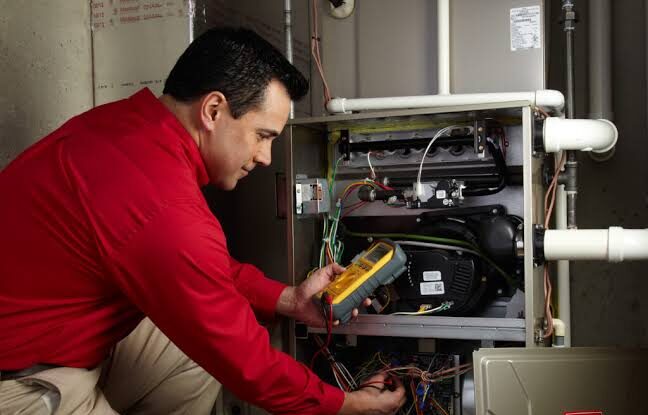
JMR technicians verify overall heating system performance and efficiency by providing an industry-standard inspection, testing, and cleaning on a regular schedule.
Avoid costly repairs (and sales gimmicks).
Inspect and Clean
- Burners
- Internal components
- Electrical connections
- Safety controls
- Vents and register
Test
- Gas pressure
- Combustion
- Carbon monoxide levels
Check
- Thermostat calibration
- Heat exchanger
- Blower motor operation
- Airflow
Replace
- Dirty air filters
- Worn components as needed and requested
Heating Repair
Do I need to repair or replace my heating system? The answer is not always straightforward, but if you have options you deserve to know them.
Our certified JMR technicians can quickly diagnose problems with your heating system and provide you with options that fit your circumstances.
No pressure. No upsells.
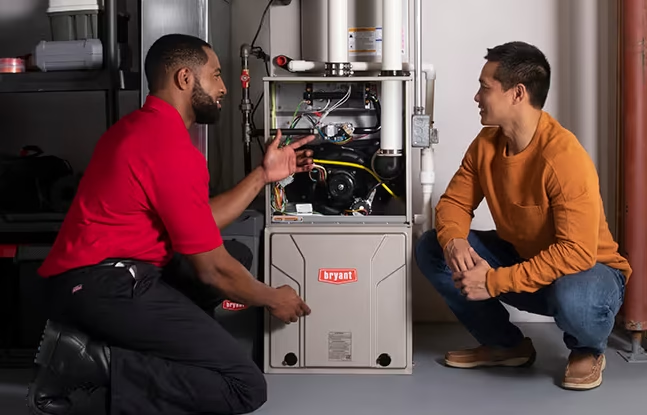
Thermostat replacement
Flame sensor cleaning
Furnace ignitor replacement
Blower fan motor repair
Draft inducer motor replacement
Heat exchanger replacement
Heating System Installation
Installing a new heating system in your home is a major investment. That’s why it’s important to choose the right equipment and the right installation professionals.
JMR technicians safely size, connect, and calibrate heating systems to ensure maximum energy efficiency and long-term reliable performance.
A professional furnace installation requires a professional.
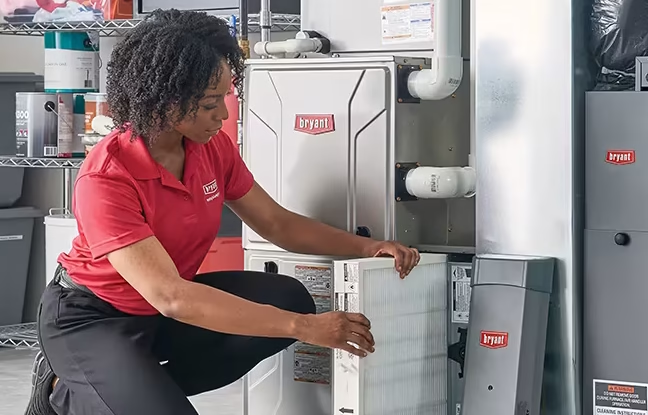
Home Assessment and Sizing
- Square footage of home
- Insulation levels
- Ductwork condition
Model Selection
- AFUE ratings
- Comfort features
- Preferred Budget
Site Preparation
- Clean work area
- Adequate ventilation
- Working gas lines
Precision Installation
- Meeting factory specifications
- Secure connections for gas, electric, and flu
System Testing and Calibration
- Airflow,
- Temperature rise
- safety controls
- Quiet, efficient operation
Final Inspection and Education
- How-to operate system
- Furnace maintenance requirements
- Answer questions
Heating Systems FAQ
You can make your heating system operate more efficiently and lower your energy bills by performing basic maintenance, upgrading your controls, and sealing your home against heat loss.
If your heating system is more than 15 years olds, a new unit could save you up to 20% on your annual heating gas consumption, depending on the efficiency rating of your current unit.
An energy efficiency rating is a standardized measure indicating how efficiently a product uses energy. The higher the rating, the more energy efficient the unit is and the lower the fuel bills will be, assuming the system is regularly maintained.
AFUE stands for “Annual Fuel Utilization Efficiency”, which measures how efficiently a furnace converts fuel into usable heat for your home. A higher percentage means less wasted energy and lower fuel bills.
For Example: A furnace with an AFUE of 95% converts 95% of fuel into heat, wasting only 5%.
To buy the right size heating system, balance your home’s square footage, local climate, and insulation quality through a professional Manual J Load Calculation rather than relying purely on size.
Many factors are taken into consideration to properly size the equipment for your home. An experienced heating contractor will calculate what size and type of heating system is best for your complete comfort.
Hot and cold spots in a house usually happen because of restricted airflow, leaky ductwork, poor insulation, or an improperly sized HVAC system. The solutions range from simple and cheap, to complex and expensive.